Hormone Replacement Therapy (HRT), also called Menopausal Hormone Therapy (MHT), is one of the most effective treatments available for many symptoms of perimenopause and menopause. Yet for many people, it is also one of the most misunderstood.
If you’ve been told to “just deal with it,” or if you’ve been left feeling confused after reading conflicting information online, you’re not alone.
At Harmony Roots Wellness, we believe hormone therapy should never be one-size-fits-all. We take time to understand your symptoms, your health history, your goals, and your concerns so we can create a treatment plan that is safe, individualized, and based on the latest medical evidence.
Whether you’re hoping to sleep through the night again, stop having hot flashes, improve intimacy, protect your bones, or simply feel like yourself again, we’re here to help you navigate your options.
Hormone therapy can be life-changing for many people experiencing moderate to severe menopausal symptoms.
You may benefit from HRT if you’re experiencing:
For many healthy individuals who begin treatment before age 60 or within 10 years of menopause, the benefits often outweigh the risks. Every recommendation is individualized after reviewing your personal and family medical history.
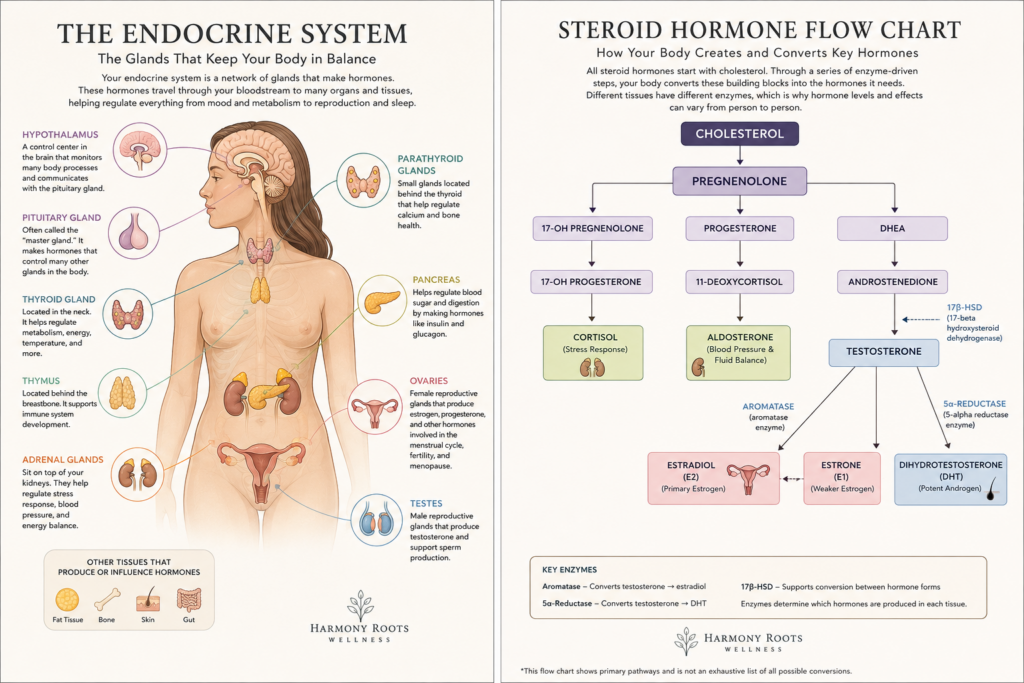
Estrogen is the hormone most closely associated with menopause symptoms.
As estrogen levels decline, many people experience:
Replacing estrogen can significantly improve these symptoms and may also help preserve bone density while reducing the risk of fractures in appropriate candidates.
If you still have your uterus, progesterone is generally prescribed along with systemic estrogen to help protect the uterine lining from abnormal thickening.
Micronized progesterone may also offer additional benefits for some individuals, including improved sleep and reduced nighttime awakenings.
If you’ve had a hysterectomy, progesterone may not be medically necessary for uterine protection, though there are situations where it may still be considered based on your symptoms and treatment goals.
Although often associated with men, testosterone also plays an important role in women’s health.
Some people experience low sexual desire, decreased energy, reduced muscle strength, or diminished overall well-being during menopause. In carefully selected individuals, testosterone therapy may be considered after a thorough evaluation and discussion of the current evidence.
Because testosterone is not FDA-approved specifically for menopausal symptoms in women, its use requires careful counseling, individualized dosing, and ongoing monitoring.
For appropriate candidates, hormone therapy may help improve:
Many patients also report improvements in exercise tolerance, recovery, and daily functioning once their symptoms are better controlled.
Many concerns about hormone therapy stem from early interpretations of the Women’s Health Initiative (WHI), a large study published in 2002.
Since then, researchers have learned much more about who benefits most from hormone therapy, when it should be started, and which formulations may offer the best balance of benefits and risks.
Current evidence suggests that for many healthy individuals who begin hormone therapy before age 60 or within 10 years of menopause, treatment is generally considered safe when individualized appropriately.
Potential risks vary depending on:
At Harmony Roots Wellness, every treatment plan includes shared decision-making so you understand both the potential benefits and the possible risks.
Every person is different, and there is no single “best” form of hormone therapy.
Depending on your needs, treatment may include:
Convenient and familiar for many patients.
Provide consistent estrogen delivery while avoiding first-pass metabolism through the liver. Patches may be preferred for individuals with certain cardiovascular or clotting risk factors.
Used primarily to treat vaginal dryness, discomfort with intercourse, urinary symptoms, and recurrent urinary tract infections with very little systemic absorption.
An option for some individuals experiencing vaginal dryness and painful intercourse.
Your provider will discuss which option best aligns with your symptoms, medical history, insurance coverage, and preferences.
Many patients ask about “bioidentical hormones.”
The term simply means the hormone has the same molecular structure as the hormone naturally produced by the human body.
Several FDA-approved hormone therapies—including many estradiol products and micronized progesterone—are bioidentical.
Compounded hormone therapies may be appropriate in select circumstances, such as allergies to inactive ingredients or unique dosing needs, but they are not routinely recommended over FDA-approved options because compounded medications are not covered by insurance.
We will discuss the advantages and limitations of each option during your consultation.
Starting hormone therapy is not a one-time event—it is an ongoing partnership.
After beginning treatment, we typically schedule follow-up visits to review:
Routine hormone level testing is not necessary for everyone. In many cases, treatment decisions are guided by how you feel rather than laboratory numbers alone, though we use lab-based treatment as a starting point for most patients.
Hormone therapy is just one part of comprehensive menopause care.
Your treatment plan may also include recommendations for:
We believe the best outcomes come from treating the whole person—not just replacing hormones.
Many symptoms of menopause overlap with other areas of health. You may also be interested in:
A comprehensive overview of symptoms, lifestyle changes, and treatment options throughout the menopausal transition.
→ Pelvic Floor Health & Incontinence Care
Support for bladder leakage, pelvic organ prolapse, pessary fitting, and pelvic floor wellness.
Evaluation and treatment for vaginal dryness, recurrent yeast infections, bacterial vaginosis, urinary discomfort, and Genitourinary Syndrome of Menopause (GSM).
→ Sexual Wellness & PRP Treatments
Options to address painful intercourse, decreased sexual satisfaction, and vaginal tissue changes.
→ Women’s Health Screenings
Preventive care including cervical cancer screening, breast health, bone health, cardiovascular risk assessment, and routine wellness visits.
→ Medical Weight Loss & GLP-1 Therapy
For patients experiencing weight changes during menopause, we offer provider-led, judgment-free medical weight management with individualized support.
No. Many people begin experiencing bothersome symptoms during perimenopause, several years before menopause is officially diagnosed. Hormone therapy may be appropriate during this transition depending on your symptoms, menstrual pattern, and medical history.
Current evidence does not show that hormone therapy directly causes significant weight gain. In fact, some people find that improved sleep, reduced hot flashes, better energy, and preservation of muscle mass make it easier to maintain healthy habits during menopause.
There is no universal time limit. Treatment decisions are individualized and reviewed regularly. Some people use HRT for only a few years, while others continue longer if the benefits continue to outweigh the risks.
Often, yes. Individuals who have had a hysterectomy may be candidates for estrogen therapy without progesterone, depending on the type of surgery and their medical history. Though many still benefit from the balance provided by dual therapies.
Yes. Vaginal estrogen, in particular, can improve urinary urgency, recurrent urinary tract infections, and discomfort related to Genitourinary Syndrome of Menopause. Some bladder symptoms are also related to pelvic floor dysfunction, so we may recommend additional evaluation or treatment through our Pelvic Floor Health program.
When clinically appropriate, testosterone may be considered after a thorough evaluation and discussion of current evidence, potential benefits, and possible risks. Treatment is individualized and closely monitored. Many women experience a decline in Testosterone in menopause and with it goes energy, libido, and mood changes. We are happy to support adding testosterone back in based on current serum lab values either through injectables, creams, or pellets. Unfortunately, insurance will not support testosterone therapy for women at this time, but we have wholesale and sliding scale options available.
Menopause care is more than writing a prescription.
At Harmony Roots Wellness, you’ll receive thoughtful, unrushed care from a provider (Treanna, WHNP) who listens, answers your questions, and partners with you to create a plan that reflects your values and health goals. We stay current with evolving menopause research and provide inclusive, affirming care for cisgender women navigating period struggles to menopause challenges, transgender men and women throughout puberty to end-of-life care, nonbinary individuals finding their unique expression in the world, and anyone navigating hormone-related changes.
Our goal is to help you feel informed, supported, and empowered—not pressured into any one treatment approach.
If hot flashes, poor sleep, mood changes, vaginal discomfort, or other menopausal symptoms are affecting your quality of life, you don’t have to navigate them alone.
Whether you’re exploring hormone therapy for the first time, seeking a second opinion, or looking for a provider who will truly listen, Harmony Roots Wellness is here to help. Together, we’ll review your symptoms, discuss your options, and develop a personalized plan designed to help you feel your best through every stage of menopause.